G. C. Williams
Chesapeake Bay Maritime Museum, Uncurated Search Results
Type: Skipjack
Year: 1901
Builder:
Location: Crisfield
These records are found in the collection of the Chesapeake Bay Maritime Museum in St. Michaels, Maryland. Uncurated search results are presented to give researchers and interested readers an idea of whether CBMM’s archives contain information about this vessel and whether it may be worthwhile to contact CBMM for further investigation. Uncurated results may be inaccurate or incomplete.
For more information about these items, contact the CBMM curator at collections@cbmm.org, or use the selection buttons below to submit a research request.
Search mode: Exact Name. Search phrase(s): "G. C. Williams"; "G C Williams". Results returned: 25. Results displayed in this table: 25.
Use these buttons to send uncurated search results to your own app or text document for further research. First, check the box for any row, or click "Select All" then uncheck any rows. Then click "Show Selections". You can then copy your selections from the text box and past them into your app.
| Fetch? | Row ID | Catalog # | Object Name | Title | Artist/Maker | Date Made | Place Made | Description | Full Image | CBMM Cat. Page |
|---|---|---|---|---|---|---|---|---|---|---|
| 1 | 8888.0096.0000.00 | documents | Lumber Industry Documents:BackgroundThe mate | Lumber Industry Documents:BackgroundThe material in this collection was acquired by purchase from various sources. It consists of two receipts, a time-keeper's book, a book listing lumber sales and shipments, a ledger of 304 pages, and a sheet found in the time-keepers book listing expenses for trips.Scope and ContentThe two receipts are dated 28 September and 30 November 1829 and refer to the receipt on board the sloops Eagle and True Guide of stated quantities of corded oak wood. In both cases the oak wood is for Justes Lowery, apparently of Hall's Landing. The only information about the vessels and Lowery is that contained in the receipts themselves. The location of Hall's Landing is not known.The book listing lumber sales and shipments by K. C. Rice of Craddockville, VA, dates from August 1916 to April 1918, and describes the transactions in detail. Craddockville is located at the head of Craddock Creek, about four miles west northwest of Belle Haven, VA. Most of the lumber, which largely consisted of 35- to 75-foot pilings or "sticks", was shipped by rail, although some was rafted. There are frequent references to Pennsylvania Railroad "car" numbers. Shipments were mostly from such Eastern Shore of Virginia points as Birds Nest Station, Nassawadox Station, Eastville Station, and Machipongo Station. Destinations included Newark and Harrison, NJ, Boston, MA, Buffalo, NY, and Mahanoy City, PA. Some of the "sticks" were sold under contract to the U. S. Government.The time-keeper's book covers the period from April 1910 through October 1910 and November 1912. It lists K. C. and John W. Rice, as well as a number of other employees. It gives the number of days worked per month. Each month is divided into two parts. Although the printed format contains a column for pay "rate per day", no rates are entered, nor is there an entry in the column for total amounts paid. The name K. C. Rice has been entered on the flyleaf at the back of the book.The ledger, which apparently is from the L. J. Houston & Co. of Stockton, MD, covers the period from January 1902 through December 1907. Stockton lies about eleven miles south of Snow Hill, MD, and about three miles north of the Virginia border. The ledger reflects monetary entries for a number of individuals and organizations whose names are shown in an alphabetical index at the front of the volume. In addition, sections of the ledger at pp. 193-209 and 302-304 list weekly rental income for 1909-1910 and1904-1906 respectively.One BoxFolder 1- Two receipts: (1) dated 28 Sept 1829 for eighteen and one half cords of oak wood received on board the sloop True Guide at Hall's Landing by W. | No image URL. | View | ||||
| 2 | 8888.0052.0000.00 | documents | CAPTAIN LEONARD S. TAWES MANUSCRIPT COLLECTION | CAPTAIN LEONARD S. TAWES - MANUSCRIPT COLLECTION<CR><CR>Biographical Background<CR> Captain Leonard S. Tawes was born in Accomack County, Virginia, on October 2, 1853. He died in Crisfield, Maryland, on December 6, 1932. He went to sea at an early age, worked his way up to master of sailing vessels, and continued actively to captain sailing vessels until 1922 when he retired from the sea to devote himself to oyster farming in the area around Crisfield. In his retirement, using his logs and other records, Tawes composed a series of journals covering his life and recounting his maritime experiences in detail. The journals, edited by Robert H. Burgess, called Coasting Captain, were published as a book by The Mariners Museum in 1967. This volume is an excellent companion to the manuscript collection and permits clarification of many of the entries found in the manuscripts themselves. In 1884 Captain Tawes took command of, and part ownership in the three-masted, 138-foot schooner City of Baltimore. The 356-gross ton schooner was built by Goss, Sawyer & Packard of Bath, Maine, and was launched on February 2, 1884. Tawes captained the City of Baltimore until 1904 when she was sold in Tampa, Florida (Coasting Captain, 146, 445-6). Most of the material in the manuscript collection relates to the period during which Tawes sailed the City of Baltimore.Scope and Content The collection consists of seven bound booklets and ledgers, and one folder containing various documents which were found in the ledgers when they were accessioned. Most of the material is financial and other operating records from the schooner City of Baltimore. Subject: Captain Leonard S Tawes | No image URL. | View | ||||
| 3 | 8888.0001.0000.00 | documents | Howard I. Chapelle Papers | Chapelle, Howard I | Exact 01/01/1901 - | The papers of Howard I. Chapelle consist of notes, printed materials, articles by others, some plans and correspondence. Much of the material is not original, but is source material collected by Chapelle.<br /><br />The papers are divided into three basic sections: 1. Correspondence, 2. thematic folders, and 3. whole notebooks by Chapelle. Papers are arranged into the most specific topic heading as possible. However, a researcher would be advised to peruse the subject headings before beginning specific research. | No image URL. | View | ||
| 4 | 8888.0009.0000.00 | documents | Thomas Beauchamp Taylor (1823--1901) Papers (1855- | Range, Exa 01/01/1855 - 12/31/1880 | Thomas Beauchamp Taylor (1823--1901) Papers (1855--1880). Biographical BackgroundThomas B. Taylor was born near Barren Creek Springs, Md. (now Mardela Springs) on September 5, 1823. His family had been on the Eastern Shore for several generations and his grandfather served in the Revolution.Taylor's father, Thomas Taylor, served in the War of 1812 and was a sailor. Married to Eliza Smith, they left three children: Ellen, Uriah and Thomas B. Taylor'smother died at his birth. His father died in 1832.Taylor's upbringing after his parent's death is not clear. He was, apparently, educated because at age19 he began to teach school. He taught for three years.In 1849 Taylor went to work for Lemuel Rush Bratton (Brattan, Bratten) at his store in Barren Creek Springs. In 1850 he purchased the store's goods and went into business with Washington R. Melson until 1853 when Melson moved to St. Michaels.Taylor retired from the store in 1890, but did not sell it.Taylor also served as a public official. He was elected a Wicomico County Commissioner in 1867, the year the county was formed. He served in the Maryland State Legislaturein 1883. He was a member of the Methodist Protestant Church a trustee there, and for 21 years he was superintendent of the Sunday School. He was a Mason, an Odd Fellow and a Heptasoph.Taylor owned 1200 acres of land near Barren Creek Springs. In 1898 he owned the Mardela Springs Hotel with James E. Bacon. Taylor never married. After his death on October 9, 1901 his store was sold. It sold in 1908 to C. A. Calloway.Biographical material from Chapman Publisher's PORTRAIT AND BIOGRAPHICAL RECORD OF THE EASTERN SHORE, 1898. See also publications by J. Howard Adkins: TO SPEAK OF MANY THINGS: ABOUT VIENNA, MD.; TO SPEAK OF MANY THINGS: ABOUT MARDELA DOCTORS, CEMETARIES AND BIBLE RECORDS; TO SPEAK OF MANY THINGS: ABOUT SMITH ISLAND AND RELATED AREA FAMILIES.Scope and ContentThe materials in this collection all pertain to Taylor's store in Barren Creek Springs. The collection consists mainly of receipts and bills from Taylor's store. Many of the receipts pertain to commerce by sailboat and name vessels belonging to Taylor.Taylor owned the CHESAPEAKE TRADER,a schooner built in 1856. Papers in the collection refer to this vessel and others. See the boat names list.One of the most interesting groups is a selection of permits to ship during the Civil War. The Eastern Shore was considered a restricted area because of its unclear allegiance to the Union. One Shipping Restriction Permit is on display in the Chesapeake Bay building.Mr. and Mrs. J. Howard Adkins have kept a selection ofthe Taylor Papers including many account books. Researchers should contact J. Howard Adkins at 1010 Camden Ave., Salisbury, Md. 21801, for permission to use these papers. Many of the papers are available in the Adkin's publications listed above.SubjectsCivil War; Eastern Shore; Sailboats, commercial; Thomas B. Taylor; Wicomico county.Boat Names: (information in brackets from the 1887 LIST OF MERCHANT VESSELS OF THE UNTIED STATES)CHESAPEAKE TRADERJOHN RONLETT MARY ALICEENTERPRISEELIAZA MATTHEWS JOHN BRADLEYBRAVEL. E. WILLIAMS MARYLANDMARY E.LAW LIVELY DOVEWIDOWS SONSTHOMAS H. NORTHERNER Subject: Thomas Taylor | No image URL. | View | |||
| 5 | 8888.0016.0000.00 | documents | Albert E. Brown and Bro Papers<CR><CR>The collection i | Brown, Albert __Creator | Exact 02/01/1988 - | Albert E. Brown and Bro Papers<CR><CR>The collection is comprised of some of the correspondence and business papers concerning the Brown's Sail Loft in Winona, Maryland. Included are many sail plans for work and recreational boats. These papers were retrieved by museum staff from the derelict sail loft with the permission of the owner. Many are damaged or, deteriorated.Biographical BackgroundAlbert E. Brown and Bro/ sail.1oft~:~was located at Wenona, on the southern tip of the island. The Loft was founded in 1870 by Capt. John Stubbs. In 1890 he was bought out by Henry Brown, born in England, and who served as a seaman in the Royal Navy. He learned the art of sailmaking when he came to the United States during the Civil War and joined the United States Navy.Henry constructed the present building. When he retired in 1919 his son Albert took over the sail loft. Albert's son Henry, in turn, started at the loft when he was 12 years old and took over the business in 1956. Henry G. Brown retired about 1980 and the building has stood empty ever since. In 1986 the old sail loft changed hands.In its heyday, the business was one-of the region's leading sailmakers and had a reputation for old-fashioned, quality workmanship. Orders for sails came from all across the country and from overseas.Scope and ContentThis material represents those papers that were salvagable and that remained in the sail loft after the business had closed. They give considerable insight into the operation of one of the country's most well-known sailmakers.The majority of the papers are correspondence written to the sail loft concerning orders for sails, frequently accompanied by a sail plan and an estimate. Of value are a number of sail plans for the oyster dredging fleet, that the loft kept on file for repeat orders, and letters concerning well-known Bay yachts. Many of these boats have long since disappeared. Sail Loft Amps (1923 - 1974)Brown Papers, p 2An index of boats is available.Correspondence was filed under boat name where it was known, and by correspondent's last name if-no specific boat was mentioned (except for one" design boats which are filed under class name).Other papers include"account books and miscellaneous business papers which provide an overview of 1"the finances of a traditional sailmaking business.Sub'ectsSailmaking Subject: Albert E. Brown and Bro. | No image URL. | View | ||
| 6 | 8888.0044.0000 | documents | Oystering Ephemera Collection | An artificial manuscript collection of materials relating to the oyster industry in the Chesapeake Bay there are 2 series in this collection from different sources.<br /><br />The Series 1 collection consists mostly of letterheads, billheads, price lists, trade cards, labels, and related items, including correspondence for a large number of oyster and seafood packing houses, some of which also dealt with fruit packing. Many of these companies were based in Baltimore, Maryland, but packers in Virginia, Massachusetts, and Connecticut are also represented. Other items in the collection include envelopes, checks, mailing tags, receipts, advertisements, recipe booklets, and ledgers.<br /><br />The Series 2 collection includes photographs and stereoviews, oyster advertising material, restaurant menus, trade cards, comics, sheet music, post cards, business receipts, and books/booklets. The collection is organized by category, Chesapeake related, and general oyster material and was collected by Michele and Clifford Krainik. | 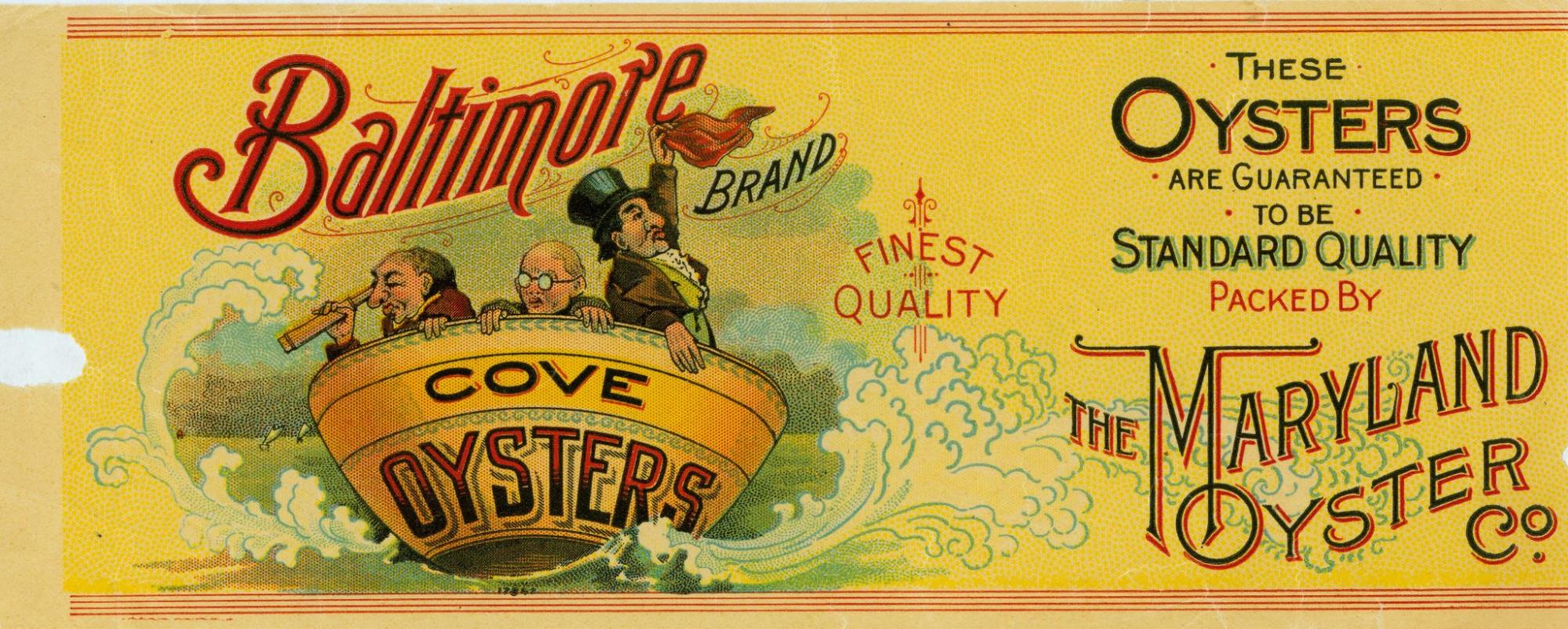 | View | ||||
| 7 | 8888.0054.0000.00 | documents | THOMAS C. GILLMER<CR>MANUSCRIPT COLLECTION<CR><CR>Thomas | Exact 01/01/1981 - 12/31/1993 | THOMAS C. GILLMER<CR>MANUSCRIPT COLLECTION<CR><CR>Thomas C.Gillmer was born in 1911 at Warren, Ohio. He became interested in ships at an early age, entering the U.S. Naval Academy and graduating in 1935. During the late 1930s he served aboard light cruisers in the Pacific and Mediterranean. During World War II he served as an instructor in naval construction, damage control, and marine engineering at the Naval Academy, eventually becoming chairman of the naval engineering department. In 1952 Gillmer wrote Naval Construction a Ship Stability, a basic text still in use in the naval architecture program at the Academy. He retired from active teaching at the Academy in 1967 and began to devote full time to the design of yachts and ship replicas. His first successful yacht design was the 1946 Blue Moon. Subsequent designs were the Southern Cross and Seawind series. He designed Pride of Baltimore 3,(1976-77), the pungy Lady Maryland (1979), and Pride 2L Baltimore 11. (1988). Most recently Gillmer prepared a study of the USS Constitution for her overhaul by the navy. He is the author of several books and numerous articles.See also Oral History tape No. 93 with transcript and list of books and articles.The manuscript collection consists of six papers:1. "Signposts Towards the Origin of Ship Design," prepared for the 5th Naval History Symposium, Annapolis, 1 October 1981.2. "Evolving Ship Design Technology As Revealed in Wrecks of Post Medieval Ships." 3rd International Symposium of Boat and Ship Archeology, Stockholm, 1982.3. "Authentic Replica Ships: Theory and Practice." International Symposium on Ship Construction in Antiquity, Delphi, Greece, August 1987.4. "The Importance of Skeleton First Ship Construction to the Development of Rational Ship Design." International Symposium on Ship and Boat Archeology, Amsterdam 1988.5. "The Second Pride of Baltimore, Her Design and Construction." 9th Sailing Yacht Symposium, Annapolis 1989.6. "USS Constitution: An Assessment for Her Future." Naval History Symposium, Annapolis 1993. Subject: Thomas C Gillmer | No image URL. | View | |||
| 8 | 8888.0087.0000.00 | documents | H. M. Rowe & Co., Oyster Packers:BackgroundI | Range, Cir 03/01/1882 - 07/31/1887 | H. M. Rowe & Co., Oyster Packers:BackgroundIn 2001 the museum purchased four large, leatherbound books consisting of volumes labeled "Ledger", "Journal", "Cash", and "H. M. Rowe & Co." The latter contained no readable entries. The Journal contained entries from 1 March 1882 through 31 August 1885; Cash had entries from 1 September 1885 through 16 July 1887; and the Ledger covered the period from 1884 through July 1887.Wood's Baltimore City Directory, 1874 (Baltimore: John W. Woods), at p. 492, lists "Rowe, H. M. & Co (H. M. & W. H. Rowe) oyster packers, 68 Boston". Also, H. M. Rowe is listed at "393 e Pratt", and Wm. H. Rowe is listed at "395 e Pratt". Finally, James B. Rowe, bookkeeper, is listed at "393 e Pratt". From this it is evident that the Rowe company was in the oyster packing business as early as 1874. Information contained in the three volumes suggests that the company ended its business in July 1887. Polk's Baltimore City Directory, 1902, has no listing for the company.In 1882 Joseph W. Brooks (1832-1915) built a schooner named H. M Rowe at his yard in Dorchester County, MD. (See Pete Lesher, "The Industrious Shipbuilder: Joseph W. Brooks" (The Weather Gauge, v. 36, No. 1, Spring 2001, pp. 3-11 and 33). A photo at p. 7 shows the Rowe with her homeport as Deals Island. The vessel's first owner was Caleb J. Moore whose connection with the Rowes is not known. As shown below, however, the Rowe company purchased oysters from the vessel over several years.Scope and ContentThe Journal and Cash volumes reflect receipts and disbursements over a five-year period. Many of the disbursements were small amounts to the three Rowes; many others were to named recipients or for such expenses as stamps, labels, etc.The Journal (pp. 1-239) is of interest because it shows on a day-by-day basis all receipts and disbursements from 1 March 1882 through 31 August 1885. Disbursements cover everything from postage stamps, newspaper purchases (New York Herald, Baltimore American), payments to the Rowes and their employees, to payments for oysters delivered by ships. Among many vessels to which payments were made were the sloop Morning Light, and schooners Sea Belle, Sharps Island, Nautilus, Exchange, H. P. Barnes, Maid of Erin, Ann Virginia, Two Brothers, and Lewis Taulane. Of special are payments to the schooner H. M Rowe. These began on 6 October 1882 with the entry (p. 45) showing a payment of $50.00, and the entry "name & colors". Subsequent entries show payments to the vessel throughout the years 1882 until 19 January 1885. Most payments were for relatively large amounts apparently for cargos of oysters: examples are payments of $315.00 on 8 December 1882 (p. 61), $511.56 on 27 December 1882, and $455.05 on 11 January 1883.However, the key portion of the collection is contained in the Ledger. Between pages 70 and 261 the entries show shipments of oysters to numerous buyers in a variety of states and Ontario, Canada. Each entry shows the date of shipment, the quantity shipped (barrels, half-barrels, kegs, tubs), the grade of the shipment(standards, selects), the price of the shipment, and the payment dates and amounts, almost always in cash. The Ledger also shows that each of the Rowes owned one-third of the value of the assets of the company (pp. 4-5), but that H.M. Rowe held the most capital (pp. 30-43). Although the Rowes were all partners in the firm, we do not know what their relationship was to each other.A second important part of the Ledger reflects payments for merchandise to numerous individuals and companies (pp. 301-329).In short, although this company was only one of many oyster packers and shippers in Baltimore during the period covered by these volumes, clearly its business was widespread and apparently lucrative: when the company apparently wound up its business on 16 July 1887, the total capital split among the Rowes was about $21,665, a fair amount for the time. | No image URL. | View | |||
| 9 | 8888.0071.0000.00 | documents | Joseph Liener Papers<CR><CR>Background<CR>Joseph Liener | Range, Cir 01/01/1909 - 01/01/2002 | This collection begins on CSC 15C1 and continues on 15C2.Joseph Liener PapersBackgroundJoseph Liener (Sept 1909-Jan 2002) was a long-time, dedicated volunteer at the Chesapeake Bay Maritime Museum. He was born in Salem, NJ, and in 1938 married Lillian England, the daughter of a Baptist minister of Alloway, NJ.As a young man Liener worked as an apprentice to several Salem house builders, becoming so proficient as to be entrusted with all their cabinet work. His life-long interest in wooden boats led to his employment before World War II as a civilian at the Philadelphia Navy Yard, where he ultimately became one of only three rated Senior Supervisors at the yard. He supervised the construction of all wooden boats built at the navy yard including mine sweepers, motor launches, yard boats, captain's gigs, and Naval Academy sloops. As part of this work he sought out special woods, selected specific trees to be cut and taken to lumber yards to be sawed to his specifications for the navy's shop work.In 1942 Liener joined the navy as a Petty Officer First Class. He was assigned to the South Pacific where he supervised the repair of damaged landing craft and assault ships. As the war ended he was stationed at Eniwetok where early atomic bombs were being tested. After the war he returned to the small craft shop at the Philadelphia Navy Yard until his retirement on 31 Oct 1969.As a volunteer at the museum Liener was instrumental in the conservation, restoration, and documentation of vessels in the small boat collection. The museum's catalog of that collection, A Heritage in Wood (St. Michaels: CBMM, 1992) is dedicated to Liener. Lines drawings of historic craft prepared by Liener are in the ships plans collection. During this period Liener became a friend of James Michener and gave him information about the bay and the watermen; Michener asked Liener to comment on a draft of Michener's book Chesapeake for which Liener provided written comments (see Box 7, folder 10).Among Liener's many avocations was making fine furniture for the house he built himself, carving decoys for his own use, playing the piano, organ, and violin, designing, building, painting, and sailing his catboat Buxom Lass. He maintained a longtime interest in catboats and was active in the national catboat association and one of the founders of the Chesapeake Bay Catboat Association. Liener's papers and other material was donated to the museum by Lillian Liener prior to her death in 2003.Scope and ContentA large part of this collection consists of correspondence Liener received from many friends and contacts. Much of the correspondence is personal, but many letters are from individuals who ask for information about all kinds of vessels, especially catboats. Among his correspondents was James Michener who asked for Liener's comments on a draft of his book Chesapeake, naval architects Lowndes Johnson and Edward Brownlee, author John Leavens, editor of The Catboat Book (Camden, ME: International Marine Pub. Co., 1973), and Dave Dillon of the Wooden Boat School and co-author of Boats A Manual for Their Documentation (Nashville: American Association for State and Local History and the Museum Small Craft Association, 1993).Sub'ectsAcademy of Natural Sciences Bermuda Maritime Museum Boston's Museum of Transportation Calvert Marine Museum CatboatsChesapeake Bay Maritime Museum Decoy CarversDecoysHistorical Society of Talbot County Morton Smith, naval architect Mystic Seaport Museum Philadelphia Maritime Museum Philadelphia Naval Shipyard Boat Shop Philadelphia Ship Model Society The Apprentice ShopGeneral Correspondence (Filed alphabetically & by date within each name)Acton, Charles L.Adler, Georgia, Historical Society of Talbot County Allen, Roger & MichelleBossett, Robert H., Matawan, Aberdeen Regional School DistrictBrous, N. S.Brinkmann, Sarah W.Carpentier, Ralph, Town Marine Museum Carney, Patrick, Black Bottom Runabouts, Inc. Cole, N. R (Roger)Conboy, Joseph L., Joseph L. Conboy & Associates, Yacht BuildersCooke, William S., & MildredCox, Richard M.Crothers, William L., The Philadelphia Model Ship Society Culver, Rebecca. L.Dery, Julian, Ajusteur D'Assurances Generales, Sherbrooke, QuebecEmmett, Jim, Waterway GuideEtter, Ellen & Dick Feree, RussellFisher, Donald (Doc) E., M.D. Fusco, PatGalvin, Ann & JimGarvie, W. C., Boatbuilder, San Rafael Harbor, CA Geer, Michael, Motor Yacht SarinaGehring, Jim & Millie, worked at Phil. Navy Yard Boat ShopGering, Larry & ArleneGraefe, Doris Gustafson, Albert V.Guthorn, Peter J. (With reply letter by Liener) Hall, ChristopherHarrington, Norman, Historical Society of Talbot County Hartge, DaveHartge, Totch (With memorial notice for Eric Joslyn Steinlein)Heffner (?), DaveHenry, Oliver, Delphi Productions, Ltd. Hewins, Charles E. Higson, James D.Hill, Charles H. Jr.Historical Society of Talbot County (Adler, Georgia, & Harrington, Norman)Homfeld, Max F.Hook, John H.Howard, Marie A. (Liener's sister-in-law) Humphrey, CraigHutchins, Dick Jenkins, W. H. Johnson, Arthur C., Jr.Johnson, C. Lowndes, Naval architect Johnson, Paula J., Calvert Marine Museum Kaighn, SusanKeller, Sherman E., St. Mary's Square Museum Kirch, Fred G.Kobialka, Edward J. Lamanteer, JackieLipke, Paul, Boat Shop Director, Boston's Museum of Transportation (Enclosing letter fromRev. Cannon Robert E. Merry) MacKannan, Charles H. & Doris Maffen, HerbMangum, Michael T., Chief Naturalist, Ocean County, NJ, Dept. of Parks & RecreationMay, George L.Michener, James & MariMills, Clark W., worked in Boat Shop at Phil. Navy Yard Miller, John H., Chesapeake Bay Maritime Museum Mulford, Wayne D.Nelson, Florence Park, David E. Patterson, Edward F., Jr.Rogers, Martha, House Restoration Coordinator, Pennsville, NJ, Township Historical SocietyPerrella, JohnPfister, George Phelps, Robert BemissPorter, Eugene, from dredgeboat Stanley NormanPostich, Joe & Wendy, Barrington, NH, Boat Shop; Postich letter of 11 Dec 85 followed byLiener letter of 8 Jan 86 attesting to good character of Postich. Rebuilt sloop Chicane inBermuda (see Chicane materiagl in Box 2, folder 6) Poston, Robert, Jr.Prugh, Robert Burton Quimby, Alfred P. Samson, Rene & JoyceSaudergas, Tony & Sherry, Philadelphia Navy Yard Boat ShopSanto, (???)Scofield, John, CBMM Boat Shop Sheehan, KevinSmith, Harry W., Barnstable Originals (Author of Windjammers of the Maine Coast, Camden,ME, 1983; compiler of Workaday Schooners, Camden, 1975)Squibb, JoryStanley, Roman S. Surgent, George Swartz, Bea Temple, Buk Thomas, BarryTomlinson, Fred & Esther, Frederick Tomlinson worked in Boat Shop, Phil. Navy YardTucker, Jane Foster (Mrs. Ernest)Van Meter, Ralph H.Waters, Karen Roy, Research, Wooden Boat magazine Wilson, Jonathan, Traditional Small Craft, and Wooden BoatSpecial CorrespondentsAllen, Mae W.Apprentice Shop, Lance R Lee, Director Brownlee, Edward G. Chesapeake Bay Maritime Museum Dillon, DaveFuller, BenPhiladelphia Maritime Museum Philadelphia Ship Model Society Seidel, CharlesWard, David Subject: Josef W Liener | No image URL. | View | |||
| 10 | 8888.0175.0000 | documents | MS 175 Ed Thieler Papers | Thieler, Edward R | Collection of materials related to Ed Theiler's model making and nameboard carving. | No image URL. | View | |||
| 11 | 8888.0060.0000.00 | documents | Feuchter Manuscript Collection | Feuchter, Louis J __Creator ||Feuchter, Walter J __Creator | 1896-1992 | A two part manuscript collection relating to Artists Louis J. and Walter J Feuchter. <br />The main focus is on Louis Feuchter including artwork with series two being about his brother Walter who is lesser known. | No image URL. | View | ||
| 12 | 8888.0090.0000.00 | documents | Penso Papers | This collection begins on CSC 15B1 and continues on 15B2, 15B3, and 15B4. One oversize folder is located in RR FF 3; the contents have 2 copies and a negative of sketch of two people in the Racing dinghy Penguin. | No image URL. | View | ||||
| 13 | 8888.0181.0000 | documents, electronic | The Delmarva Fox Squirrel in Dorchester County by Guy Willey | Willey, Guy ||Therres, Glenn | 2002 | Report by Guy Willey, biological technician at Blackwater NWR beginning in 1949, 2002, discussing the ecology of the Refuge area, hunting and trapping, his memories of changes to the forest and marsh and his role in the recovery of the endangered Delmarva Fox Squirrel. Edited by Glenn Therres, biologist, Maryland Department of Natural Resources Wildlife and Heritage Services (retired).<br />Photo by Guy Willey | 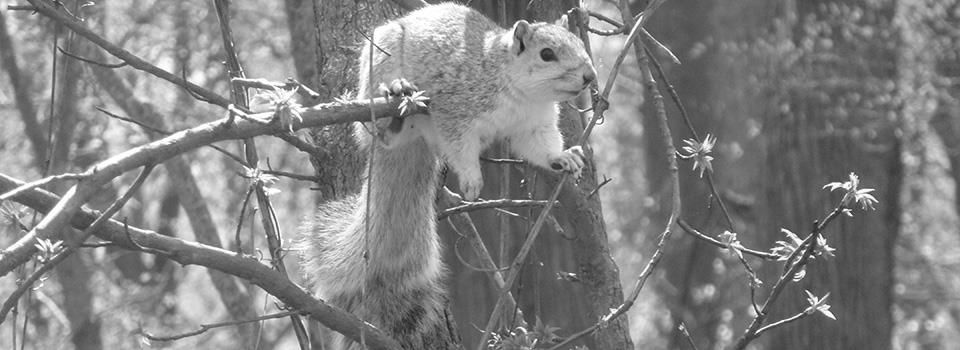 | View | ||
| 14 | 1994.0007.0001.00 | oil paintings | Painting of the "Gloucester" by Otto Muhlenfeld, a | Muhlenfeld, Otto __Artist | Exact 01/01/1896 - | Painting of the "Gloucester" by Otto Muhlenfeld, a merchants & miners steamship Condition: good. | 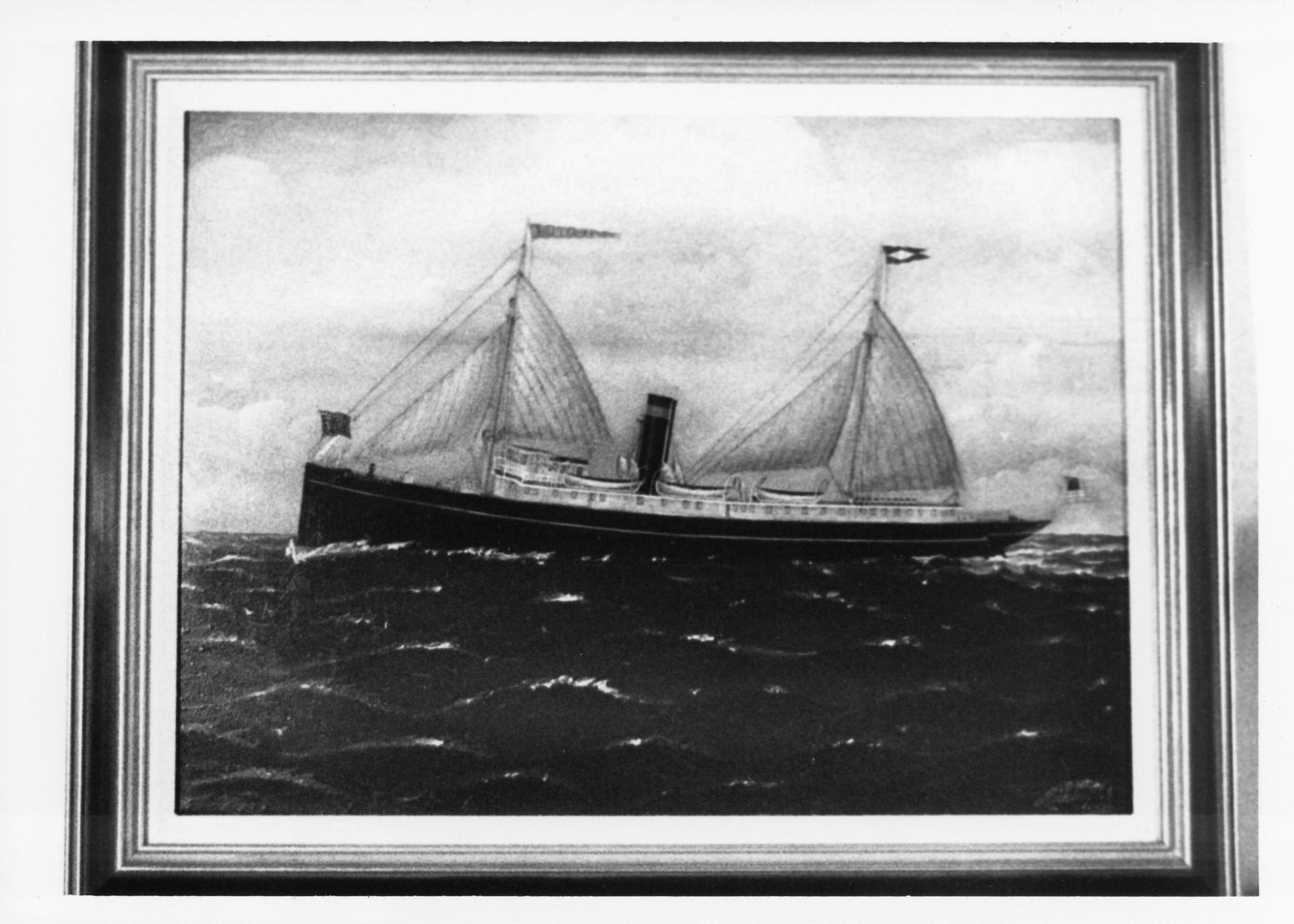 | View | ||
| 15 | 8888.0101.0000.00 | papers | Papers of Constance S. Larrabee | The material in this collection was acquired in a donation from Constance Stuart Larrabee. Constance Stuart was born in England in 1914 and sailed with her parents to South Africa in the same year. She reseived her first camera, a Kodak No. 0 Box Brownie, at the age of ten, and was captivated by the medium. She studied photography in London and Munich. In 1944, she was South Africa's first woman war correspondednt serving in WWII. Her mission in Egypt was to document the acitvities of the South African Sixth Armored Division. Although her assignment was only to last six weeks, she turned it into an extended odyssey that took her to the front lines in Italy and Southern France, to areas just liberated from Axis rule, including Rome and Paris, and to war-torn London, where the menace of the V-2 rockets was ever present. Her photographs, stark, realistic, and compelling, proide a unique insight into World War II and its aftermath. Consatnce came to America in 1949 when she married Colonel Sterling Larrabee and moved to Chestertown on the Eastern Shore in 1950. She became an American citizen in 1953. Much of her Eastern Shore life centered at King's Prevention Kennel, where she bred over 600 Norwich and Norfolk terriers. Constance bred and trained not merely pets, but champions. An acknowledged expert on the breed, she co-edited Norwich Terrier USA 1936-1966 for the Norwich Terrier Club, USA. Ever concerned with her puppies' well-being, she permitted adoption only after she had carefully screened the prospective owners.Though very involved in breeding champion terriers, she also understood the importance of being involved with her community. The Chestertown Garden Club, the Humane Society of Kent County, the Chestertown Arts League, the Kent County Arts Council, and Washington College were some of the beneficiaries of her boundless energy and inspiration. In 1955 two of her photographs were selected by Edward Steichen to be included in The Family of Man exhibition at the Museum of Modern Art in New York. She has since exhibited internationally and has work in leading museum collections, including the Corcoran Gallery of Art and the National Museum of African Art.[compliled from several sources in the collection by Lynne Phillips]Scope and ContentThe items in this collection are organized by subject. Exhbition paraphernalia, articles and press releases, correspondance, CBMM meterials, Agency 154 Paris France 1995 documents, tributes and memorials, and miscellaneous | No image URL. | View | ||||
| 16 | 8888.0098.0000.00 | papers | Burgess manuscript collection | This collection is housed in 24 boxes, starting on CSC 15A2 and continuing on to 15A3, 15A4, 16A1, and 16A2<CR><CR>The collection is broad in scope and content. It includes about 100 trailboards and name boards, and many other artifacts obtained from Chesapeake Bay vessels of all kinds; years of correspondence (covered in this finding aid), much of it acquiring background for and arranging the publication of his books, particularly those about the schooners Albert F. Paul and Purnell T. White; many of his photographs; and numerous clippings containing articles by and about Burgess.Among the highlights of the collection are a number of documents from the late 19th century such as invoices, receipts, and note from George P. Bailey, of Kinsale, VA, a dealer in wood, ties, etc., and the canner of the "Pride of Westmoreland" brand tomatoes and commission merchants Courtney & Kennan (see Box 17). Also, the lengthy correspondence (1946-1969) with the Baltimore Sunday Sun about articles Burgess submitted for publication, including the ""I Remember When" series (Boxes 19 & 20) | No image URL. | View | ||||
| 17 | 8888.0144.0000.00 | papers (document genres) | Schooner Kate Darlington and Captain Jacob Calloway papers | Records pertaining toe the Schooner Kate Darlington and the Calloway family. | No image URL. | View | ||||
| 18 | 8888.0156.0000.00 | papers (document genres) | Marine Engine Materials | Marine Engine Materials: Series 1, Gerald Dunn; Series 2, William B. Wimbrow; Series 3 Misc. | No image URL. | View | ||||
| 19 | 0000.1100 | photographs | Herman Hollerith, Jr. (1892-1976) Photo Collection | 1890-1970 | This is a collection of many photographs, which have not been cataloged individually. Please review the attachments for specific information on the images. <br /><br />Herman Hollerith, Jr. (1892-1976) Photo Collections (1890s--1970s) Biographical Background: Herman Hollerith, Jr. was born in 1892 at 3112 Q St., Georgetown, District of Columbia to Herman Hollerith, Sr. and Lucia Talcott Hollerith. His father invented the punch-card tabulating machine. He sold his company in 1911 to a firm that later became IBM. Other Hollerith children were Nan, Richard, Charles, Virginia and Lucia. The family lived in Georgetown, Garret Park and Montgomery County. In 1908 they bought a summer home in Mathews County, Virginia named Brighton. They spent their summers at Brighton from 1909. The family had a number of boats which were kept at Brighton: a New England dory named LUVINA; a flat bottomed power workboat named BRIGHTON; a 45 foot, gas powered yacht named REGINA, which was later renamed LUVINA and later still renamed MATOAKA, and an 85 foot vacht named LUVINA. The name Luvina was derived from the three daughter's names, Lucia, Virginia and Nan. Herman Hollerith, Jr. attended Worchester Polytechnic College with his borther, Charles, and received an engineering degree in 1917. He worked at the Naval Aircraft Factory in Philadelphia, and then at the Victor Talking Maching Company, where he was chief engineer and production engineer. During this time he lived in Riverton and Moorestown, New Jersey. He quit the Victor Talking Machine Company in 1928 when it was purchased by RCA. From 1932-1936 Hollerith was president of the Virginia Navigation Company and operated a small passenger steamer under contract to a large corporation. From 1936-39 he did not work during the Depression. In 1939 he moved to Baltimore to work for the Glenn L. Martin Company where he was involved in building airplanes during WWII. Hollerith worked until he was 69 years old. He was married twice. He and Sarah Valentine Fox had four children and were divorced in 1936. In 1938 he married Elisabeth C. Guest. In 1954 he bought a house near Oxford, Maryland and retired there in 1961. Hollerith was active in the early days ofnthe Chesapeake Bay Maritime Museum and was instrumental in the move of the Hooper Strait Lighthouse to the grounds. Hollerith had a love for boats and owned the ERIC, launched in 1925, until his death. This sailboat was an Atkins design based on a Norwegian ketch. ERIC was the prototype of the Westsai1 32. Hollerith died in 1976. For more information about the Hollerith family researchers should consult: HERMAN HOLLERITH: FORGOTTEN GIANT OF INFORMATION PROCESSING, by Geoffrey D. Austrian; NY: 1982, Columbia University Press. Scope and Content: This collection consists of photos taken or collected by Hollerith. The bulk of photos were taken by Hollerith of scenes from 1915-1940. They feature steamboat and sailboat scenes on the lower Chesapeake. Many of the photos were taken on cruises around Mathews County, Va. Some photos (especially M series negatives) were collected by Hollerith and taken by his father and brothers. The photos depict the agriculture life of the lower western shore and often show the introduction of power. Many of these photos have been published. The water was an important focus for life in Brighton. Mrs. Elisabeth Hollerith supplied a quote from Hollerith about life in Brighton: We did everything by boat, used the daily steamer from Norfolk for transportation to and from Washington and for most supplies including ice. Met the steamer at one of the wharves on the East River each day to pick up mail, visiting friends, etc. The roads were so bad we rarely went inland. Went to church and to visit our friends in a motor boat. In addition to the following subject indices, the researcher should note that Hollerith had his own subject indices. These are available to researchers and especially useful in looking for boat names. They are stored with the negatives. Subjects:Airplanes; Caribbean; C & D Canal; Eastern Shore; Hollerith, Herman, Jr.; Log canoes; Mathews county, Va.; Old Point Comfort, Va.; Sailboats, commercial; Seafood Industry; Steamboats, Chesapeake Bay; Washington, DC; workboats, Chesapeake Bay. Subject: Herman Hollerith Jr | 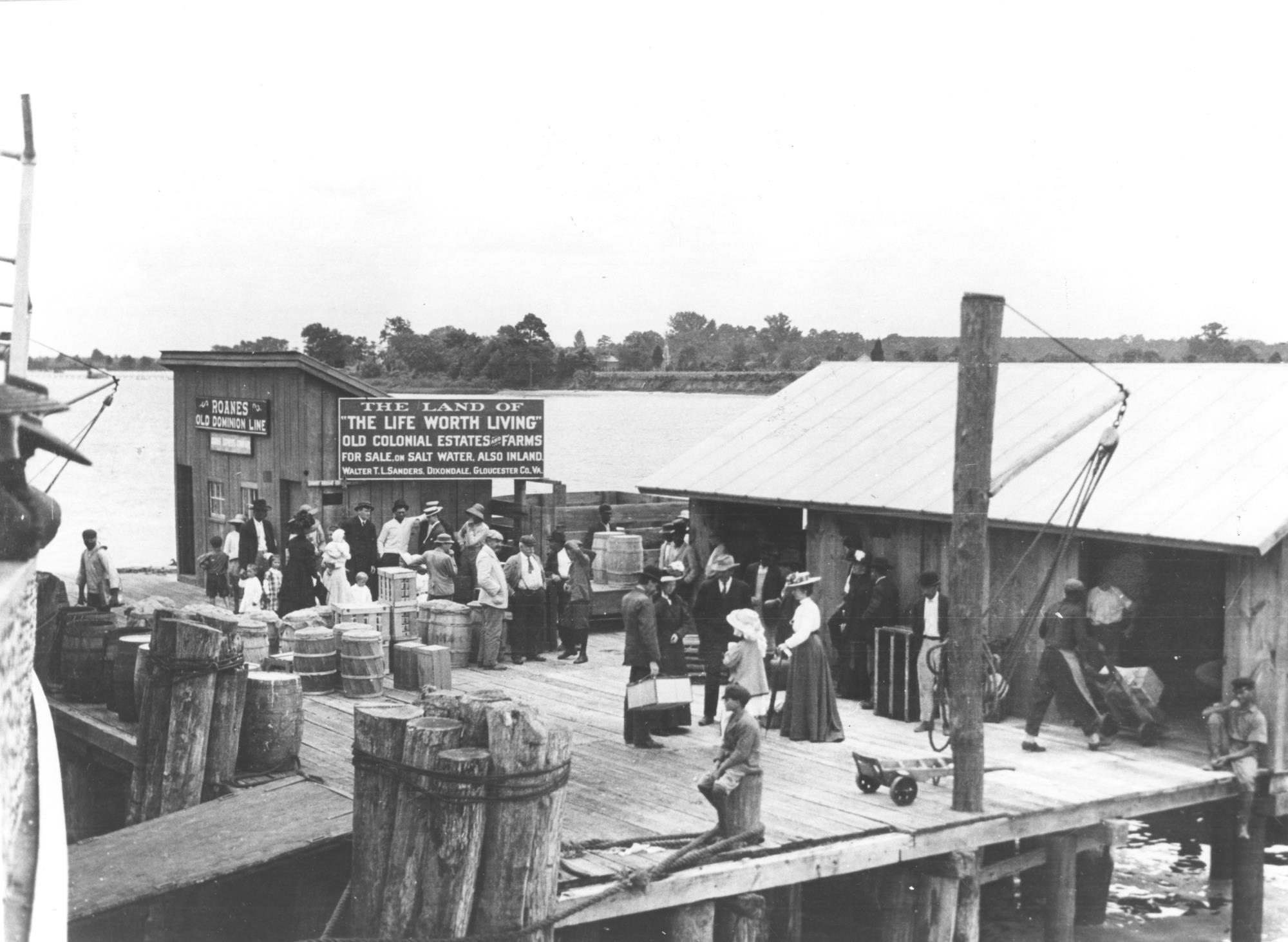 | View | |||
| 20 | 0000.2050.0563 | postcards | Boats, bridge, house | C. U. Williams | St. Michaels, MD | Sailboat docked, two wooden skiffs tied to bridge over a creek, house, many trees and street in background. Probably Honeymoon Bridge; " A Favorite Retreat, St. Michaels, Md." printed under picture. | 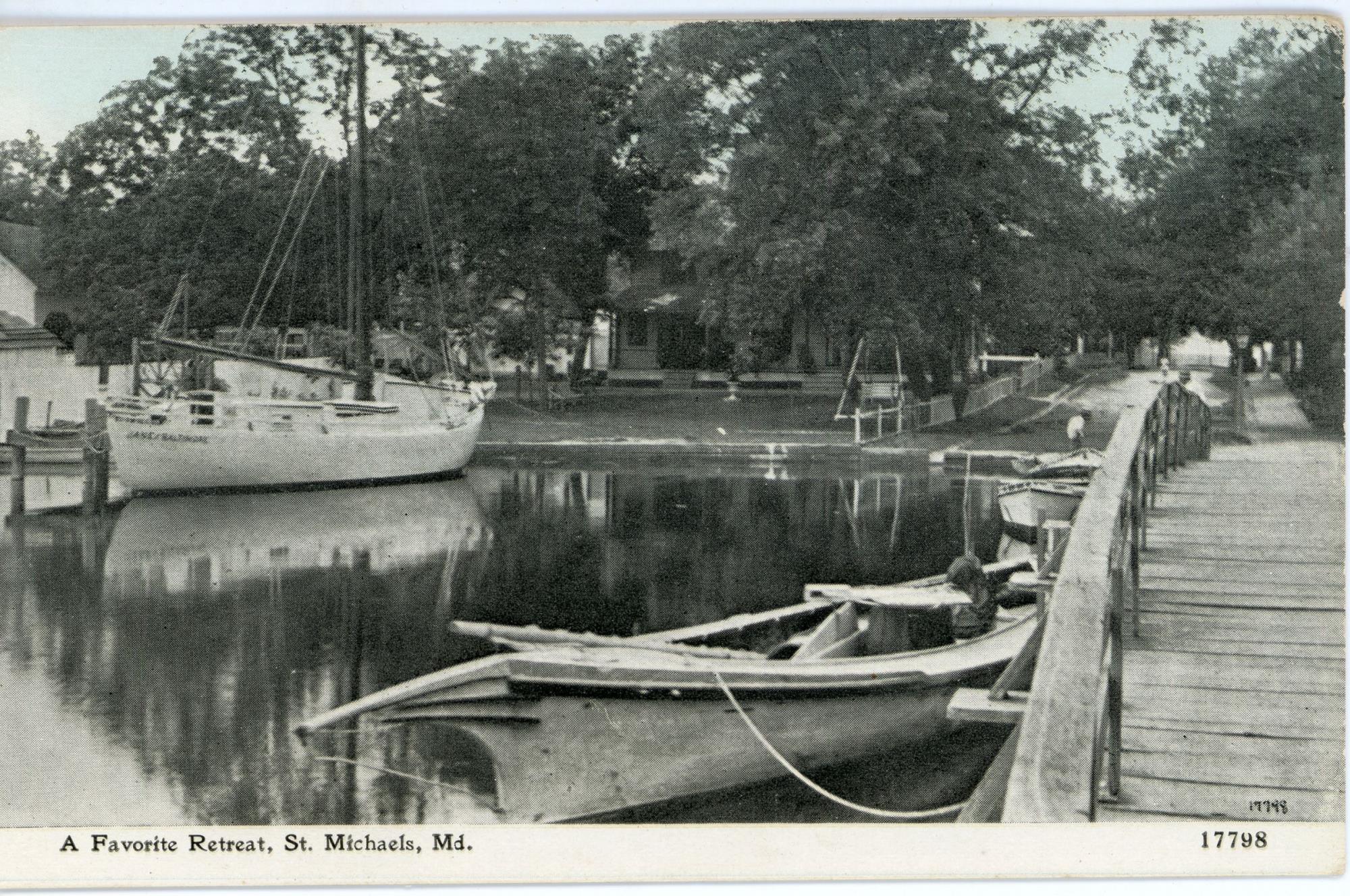 | View | ||
| 21 | 0000.2050.0673 | postcards | Rolls Range Resort | C. U. Williams, Bloomington, IL | St. Michaels, MD | "Rolls Range near St. Michaels, Md." printed under picture; shows tree-lined drive leading up to the building; several people on the porch; one car parked | 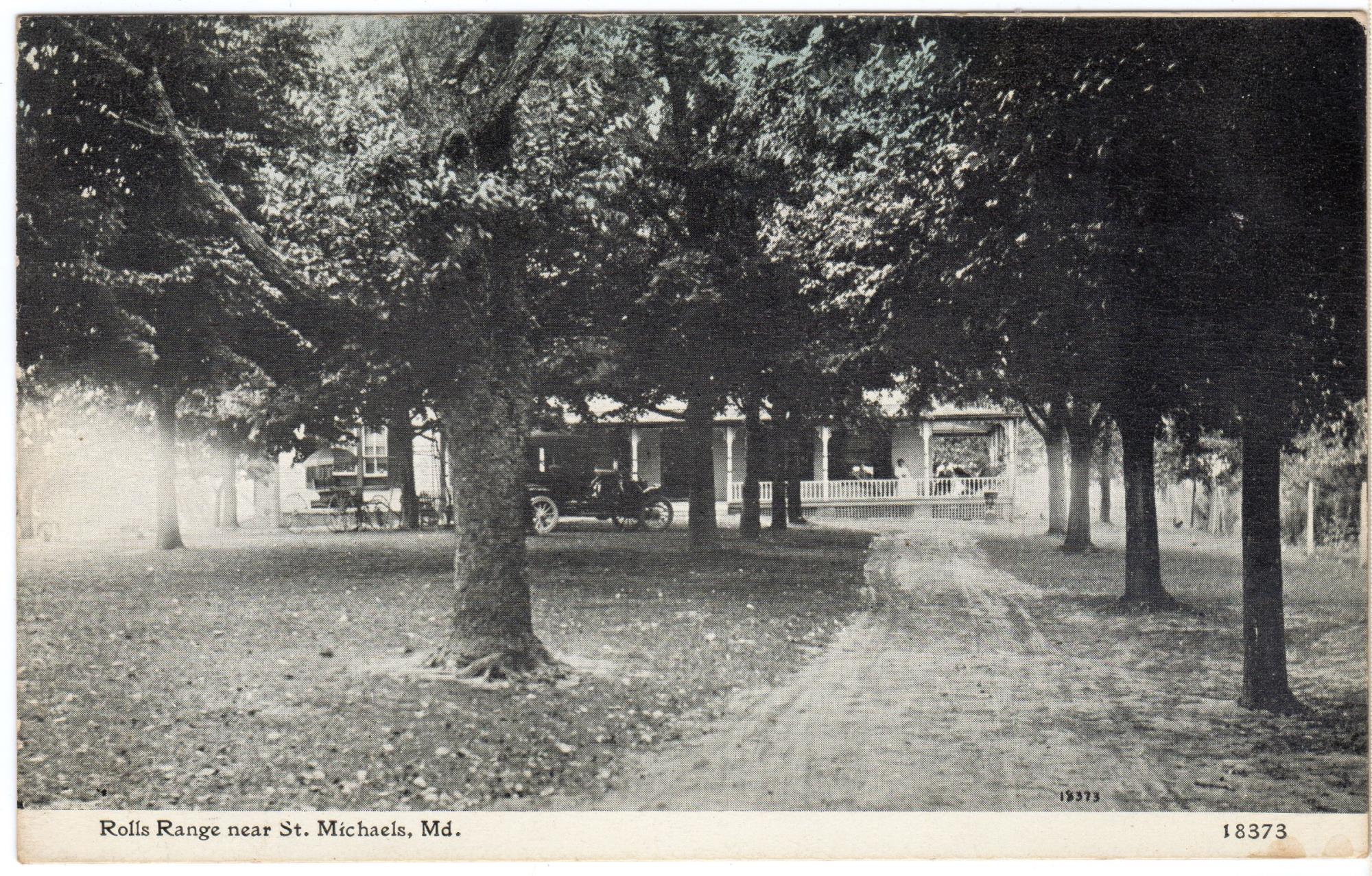 | View | ||
| 22 | 8888.0191.0000 | research (document genres) | "Notebook on Shipwrecks" research, Moale | Moale, H. Richard | circa 2000s | Research compiled by author Richard Moale while writing "Notebook on Shipwrecks" publishe din 2010. Includes, documentation of vessels, letters, and other data that did not go into the book. | 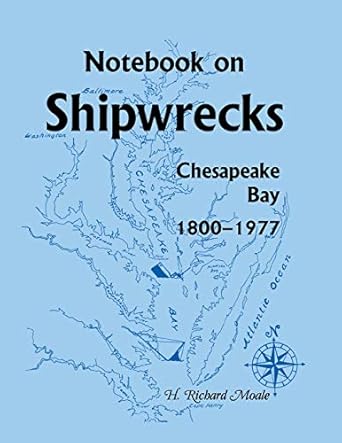 | View | ||
| 23 | 8888.0155.0000.00 | serials (publications) | Fishing and Hunting catalogs | Walters, Keith | 1911-1973 | Various catalogs, magazines, and publications collected by Keith Walters. Walters was a photographer, writer and columnist. | No image URL. | View | ||
| 24 | 2020.0013.0001 | skiffs, crabbing | Crab Skiff | Parks, Charles H. | circa 1928 | Fishing Creek - MD | Crab skiff built by Charles H. Parks and used to harvest peeler crabs out of Hooper Island. Charles H. Parks opperated a seafood packing house till the 1960s. | 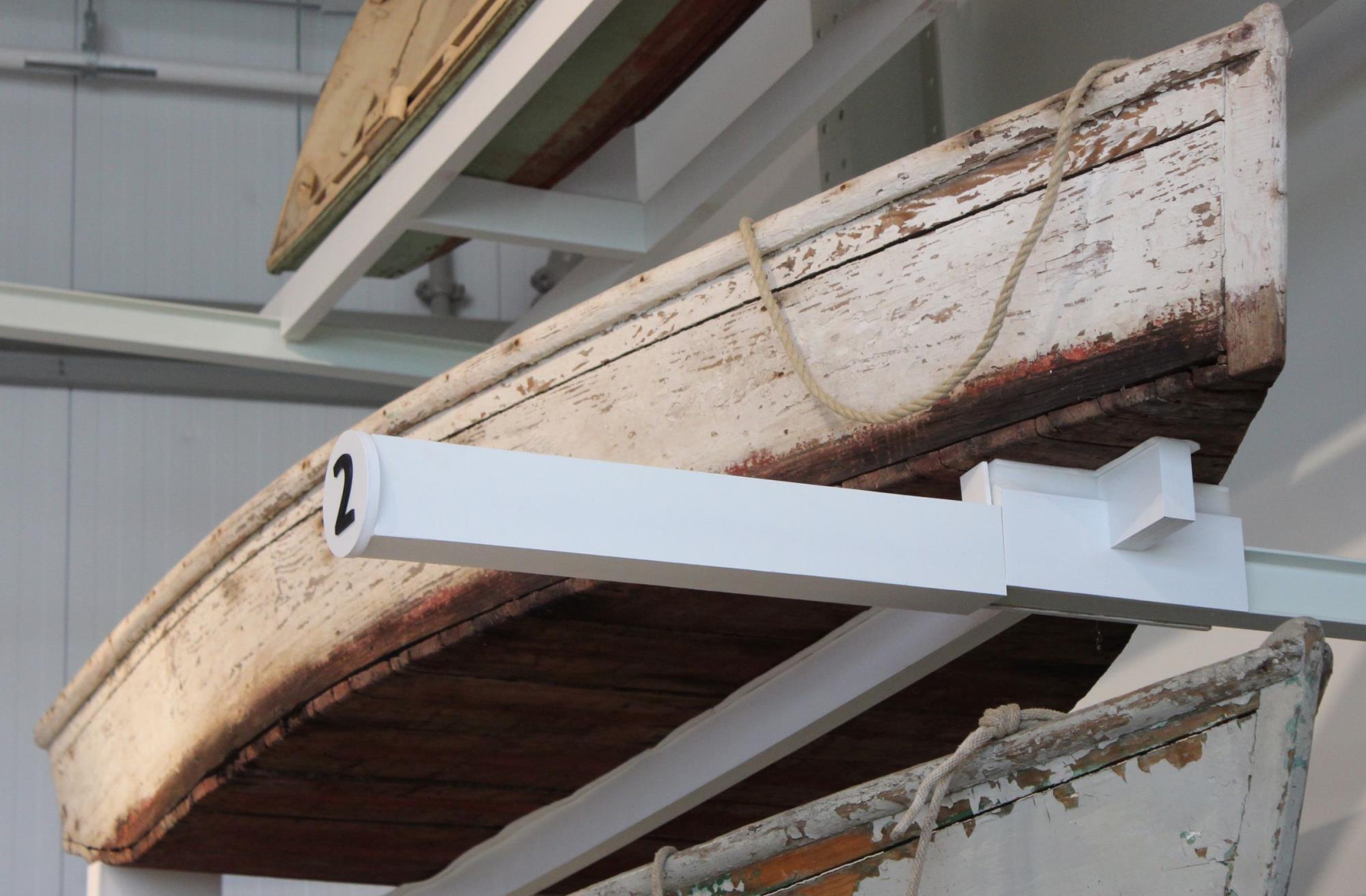 | View | |
| 25 | 2004.0050.0013.00 | telescopes | Telescope; spy glass marked: U.S. Navy, R1290 4 | Circa 01/01/1850 - | Telescope; spy glass marked: U.S. Navy, R1290 4 brass, unsigned. One pull brass, wrapped in later added cloth. Condition: Fair. Material: Brass, glass, cloth. | 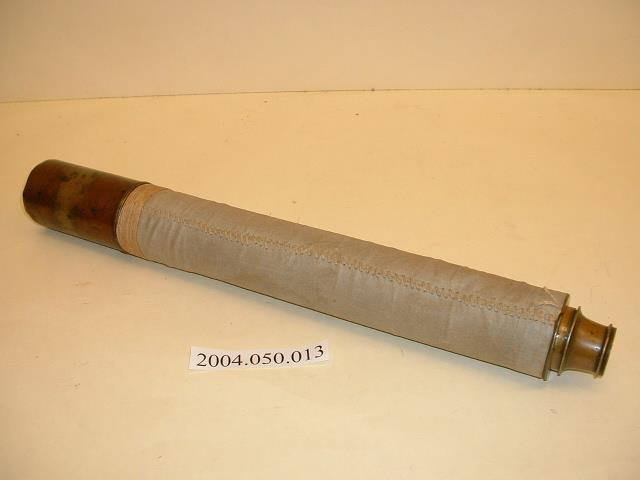 | View |
Created 2026 by Don Barker, CBMM volunteer, for the Chesapeake Shipbuilding Project. shipbuilding@sailingworkboats.es